
Brake pads wear down every time you use them, and that is normal. Heat, friction, and plain mileage grind them away bit by bit, and how fast depends on how you drive and where. City driving with lots of stop and go chews through pads quicker than highway miles. Rotors wear too, though slower, and they can warp from heat if pads get too thin and metal starts hitting metal. Brake fluid can break down over time and pull in moisture, which affects how firm the pedal feels and how well the system holds up under hard braking. All of this adds up to the noises and pedal feel changes that bring most people in, whether it is a squeal at low speed, a grinding sound, or a pedal that feels softer than it used to.
Signs You Need Brake Service
- Squealing or screeching sound when you brake
- Grinding noise that sounds like metal on metal
- Brake pedal feels soft or sinks closer to the floor
- Car pulls to one side when you brake
- Steering wheel or whole car shakes when stopping
- Brake warning light is on
Before replacing anything, we pull the wheels and take a real look at the pads, rotors, calipers, and lines. We measure pad thickness with a gauge instead of guessing from the outside, and we check the rotors for grooves, warping, or uneven wear across the surface. We also check brake fluid condition and look for any leaks in the lines or around the calipers, since a slow leak can drain fluid without an obvious puddle underneath. Caliper pistons get checked too, because a sticking piston can wear one pad faster than the other side. This tells us exactly what needs attention instead of guessing or replacing parts that still have usable life left in them, which keeps the repair focused on what the car actually needs.
If pads need to be replaced, we remove the wheel, take out the worn pads, and check the rotor surface closely. If the rotor is still within spec, meaning it has enough thickness and a smooth enough surface, it can often be resurfaced or just reused with new pads. If it is too thin, warped, or grooved from metal contact, it gets replaced along with the pads so the new pads have a flat surface to grip. We clean and lubricate the caliper slides so everything moves the way it should and the pads wear evenly instead of at an angle. Then the wheel goes back on and gets torqued to spec. Fluid gets checked and topped off or flushed if it is due, since old fluid can affect pedal feel and corrode components over time.

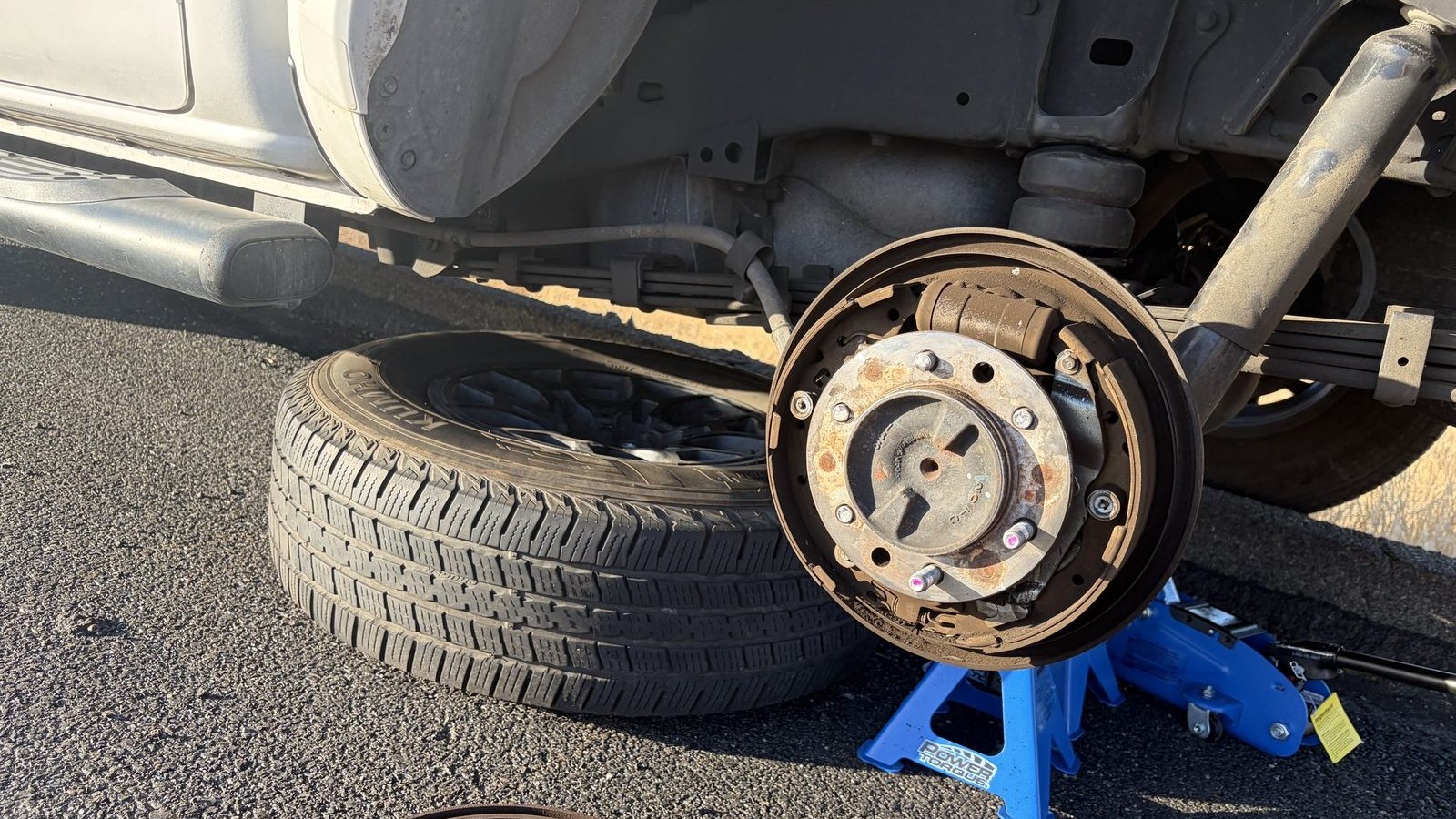

A straightforward pad replacement on one axle is a smaller job, since it mostly involves removing worn parts and installing new ones. It gets bigger if rotors need replacing too, since that adds parts and labor on top of the pads. It also grows if calipers are sticking or leaking, because a caliper that will not release cleanly can drag and wear pads unevenly or overheat the wheel. If all four wheels need attention instead of just the front or back, that doubles the work compared to handling one axle alone. Brake lines that are rusted or leaking add another layer, since those need to be replaced outright and the whole system bled afterward to clear air and push fresh fluid through. The condition of the parts underneath, not just the noise you hear from the driver seat, is what really drives how big the job turns out to be.
Brake fluid itself plays a bigger role than most people realize. It is what transfers the pressure from your foot on the pedal to the calipers squeezing the rotors, and it has to stay free of air and excess moisture to do that reliably. Moisture lowers the fluid's boiling point, which can lead to a spongy pedal or reduced stopping power under hard or repeated braking, like coming down a long hill. That is why we check fluid condition as part of any brake inspection, not just the pads and rotors. If a flush is due, we drain the old fluid and replace it with fresh fluid, bleeding the lines to remove trapped air so the pedal feels firm and consistent again.
Noises and pedal changes are the body's way of telling you something is wearing out. A squeal at low speed is often a wear indicator built into the pad doing its job, letting you know it is time to get things looked at. A grinding sound is a different story and usually means the pad material is gone and metal is contacting metal directly. A pedal that sinks toward the floor or feels soft can point to air in the lines, a fluid leak, or worn components that are not sealing pressure the way they should. Catching these signs early, before they turn into bigger problems, usually means a simpler repair with less wear on the rotors and other parts underneath.
If your brakes are grinding or the pedal feels soft, try not to drive the car more than you have to until it gets checked. Keep extra distance between you and the car in front of you, since your stopping distance may be longer than usual, and avoid hard stops if you can help it. Grinding especially means metal is wearing on metal, and the longer that goes on, the more it can damage the rotor underneath, turning a pad replacement into a pad and rotor replacement. Driving cautiously in the meantime, and getting the car looked at before a short trip turns into a longer one, helps keep a small brake issue from becoming a bigger and more involved repair.
What to Tell Us When You Call
- Year, make, and model of your car
- What you are hearing or feeling, like grinding or a soft pedal
- Which wheels seem to be affected, if you can tell
- How long the noise or feeling has been going on

 Supercanic