
Your engine runs on a mix of sensors, wires, and computer modules that all have to talk to each other. When one sensor drifts out of range or a wire corrodes, the computer notices and turns on the check engine light. The tricky part is that one light can point to a dozen different causes, from a loose gas cap to a failing ignition coil to a vacuum leak. Two cars with the same light on can have completely different problems underneath. That is why guessing at parts usually wastes money, since swapping in a new part based on a hunch does not fix anything if it was never the actual cause. The light is a starting point, not an answer, and treating it that way from the start saves time and money down the road.
Signs You Need Engine Diagnostics
- Check engine light is on or blinking
- Engine shakes or stumbles at idle
- Car hesitates or jerks when you accelerate
- Rotten egg smell from the exhaust
- Sudden drop in gas mileage
- Engine stalls out at stop signs or red lights
We start by plugging in a scan tool and pulling every code stored in the computer, not just the first one. A car can store several codes at once, and reading all of them gives a fuller picture than chasing the first one that pops up. Codes point us toward a system, like fuel, ignition, or emissions, but they do not name the exact bad part. From there we look at live data while the engine runs, checking things like fuel trims, oxygen sensor readings, and misfire counters. These numbers show how the engine is actually behaving in real time, not just what tripped the light. We also do a visual check of hoses, wires, and connectors in that area, since a cracked hose or corroded plug can cause the same symptoms as a failed part. This narrows things down before we recommend any repair.
Once we know what is actually failing, we explain it in plain language and walk through what the fix involves, so you understand what is happening under the hood and why it matters. Some jobs are quick, like replacing a sensor or tightening a loose connector that was never making a solid connection. Others take more time, like tracing a wiring short or testing a fuel injector under load to see how it performs under real engine conditions. We test the repair afterward to confirm the code clears and does not come right back, because clearing a code without fixing the cause just means the light returns later. If a light comes back after a repair, that tells us something else is still going on, and we dig further instead of assuming the first fix was wrong.

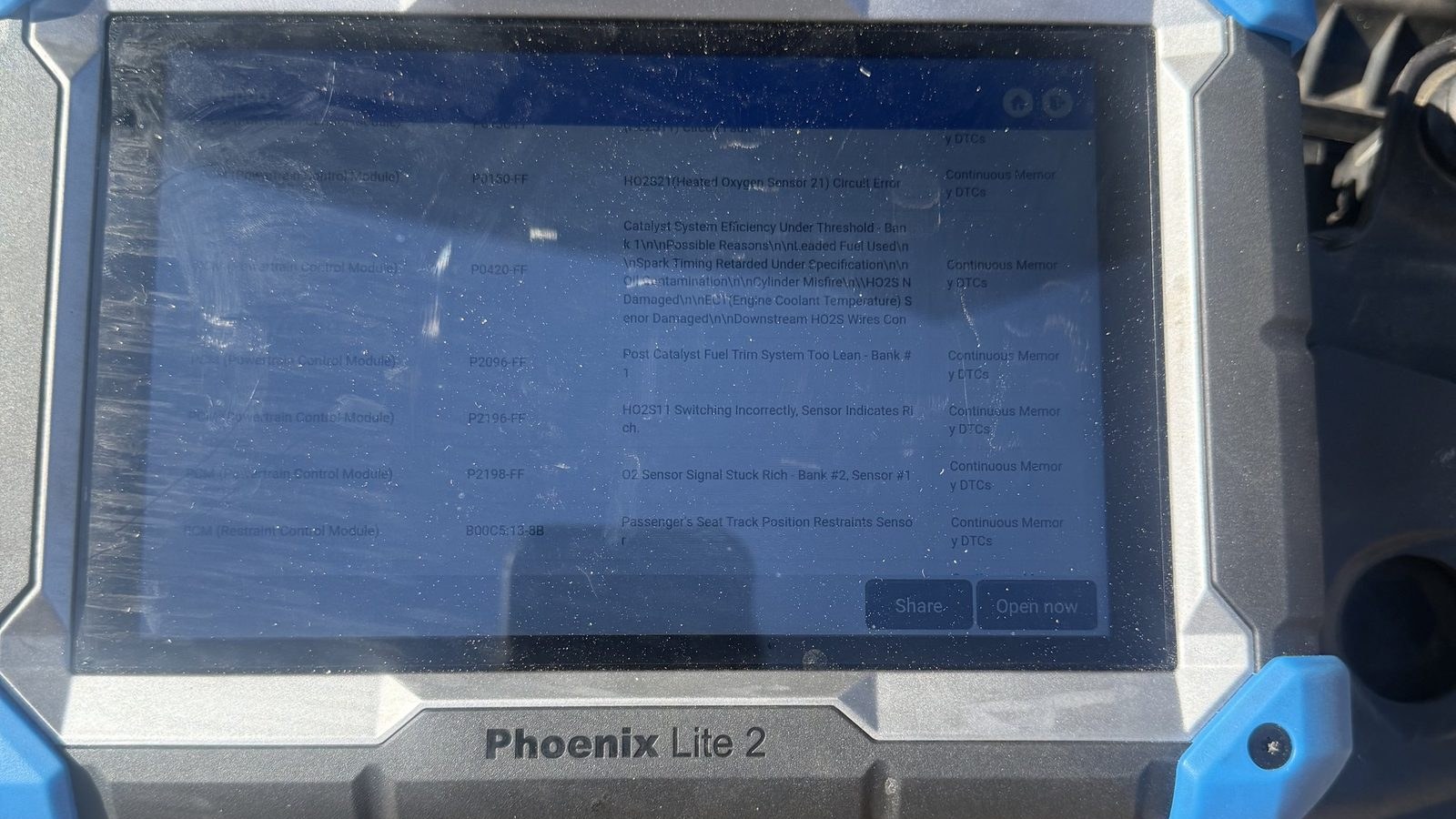

What changes the size of the job is usually how many systems are involved and how deep the problem sits inside the car. A single bad sensor is a straightforward swap, something that can often be identified and replaced without much digging. A wiring issue that runs through the dash or engine bay takes more time to trace, since the damaged section could be anywhere along a long run of wire hidden behind panels. Multiple codes at once can mean one root cause affecting several systems, or it can mean several unrelated problems happening at the same time purely by coincidence. We will not know the full scope until we actually get into it and look at how the systems are behaving together, which is why diagnosis comes before any repair estimate rather than the other way around.
A blinking check engine light is different from a steady one, and the difference matters for how you treat it. A blinking light usually means the engine is misfiring badly enough to send unburned fuel into the exhaust, which can damage the catalytic converter if you keep driving on it. A steady light is less urgent but still worth getting looked at soon, especially if you notice rough running, a smell, or any change in how the car drives. Try to avoid long highway trips until it is checked, since sustained high speeds put more strain on a system that may already be struggling. Short, careful trips to get it looked at are a better call than pushing through a long drive hoping the light turns off on its own.
Paying attention to when the light came on can save real diagnostic time later. Write down whether it happened after starting the car cold, during highway driving, right after fueling up, or in stop and go traffic. Note any unusual sounds, smells, or handling changes that showed up around the same time, since those details often point toward a specific system before we even connect a scan tool. A light that came on right after a gas station fill up points somewhere different than one that appeared during a long climb up a hill. None of these details replace an actual diagnosis, but they give us a head start on where to look first and can narrow down which systems to check more closely.
Engine diagnostics is really about separating symptoms from causes, since the two are not always the same thing. A rough idle might come from a vacuum leak, a dying ignition coil, or a dirty throttle body, and each of those needs a different fix entirely. That is why we do not treat the check engine light as the final word on what is wrong, but as a signal that tells us where to start looking. Working through codes, live data, and a physical inspection together gives a clearer answer than any single step alone. It takes a little more time upfront, but it means the repair actually addresses what is going on under the hood instead of just reacting to a warning light on the dash.
What to Tell Us When You Call
- Year, make, and model of your car
- Whether the check engine light is steady or blinking
- Any symptoms you have noticed, like shaking or hesitation
- If the light came on after any recent work or a specific event

 Supercanic