
Your suspension and steering work together as a team to keep the car stable, keep the tires planted on the road, and let you actually steer where you want to go. Shocks and struts absorb the bumps so the car does not bounce around every time you hit a dip or a pothole. Control arms, tie rods, and ball joints connect the wheels to the frame and let them turn when you move the wheel. All of these parts take a beating from potholes, rough roads, and plain everyday miles. Rubber bushings and joints wear out over time, especially around Florence and Erlanger roads that see their share of rough patches and winter damage. Once these parts get loose or worn, the car starts to feel unstable and the tires wear unevenly, which just adds another repair down the road.
Signs You Need Suspension or Steering Work
- Car bounces several times after hitting a bump
- Steering wheel pulls to one side while driving straight
- Clunking or knocking noise over rough roads
- Steering feels loose or has a lot of play
- Tires wearing unevenly on the edges
- Car dips or nose-dives hard when you brake
When something feels off in the steering or the ride, the car usually tells you in small ways before it gets serious. You might notice the car pulling to one side, a clunk over bumps, or the steering wheel feeling loose or vague. Sometimes it shows up as a vibration at certain speeds, or the car wandering a bit on the highway instead of tracking straight. These are not things to ignore, since worn suspension parts affect how the car handles in an emergency, like swerving to avoid something in the road. Catching the symptoms early usually means a smaller job instead of a bigger one once multiple parts have worn out together.
We start every job with a hands-on inspection, not a quick glance. That means putting the car on a lift and physically checking each component for play, looseness, or damage. We check tie rods and ball joints by hand, looking for any movement that should not be there. We look at shocks and struts for leaking fluid, which is a clear sign they are failing. We inspect bushings for cracking or separation, since rubber breaks down with age and exposure to road salt and oil. We also check tire wear patterns, because uneven wear almost always points to a specific worn part, whether that is an alignment issue or a bad control arm. This full inspection tells us exactly what is causing the symptoms you are feeling, instead of guessing.

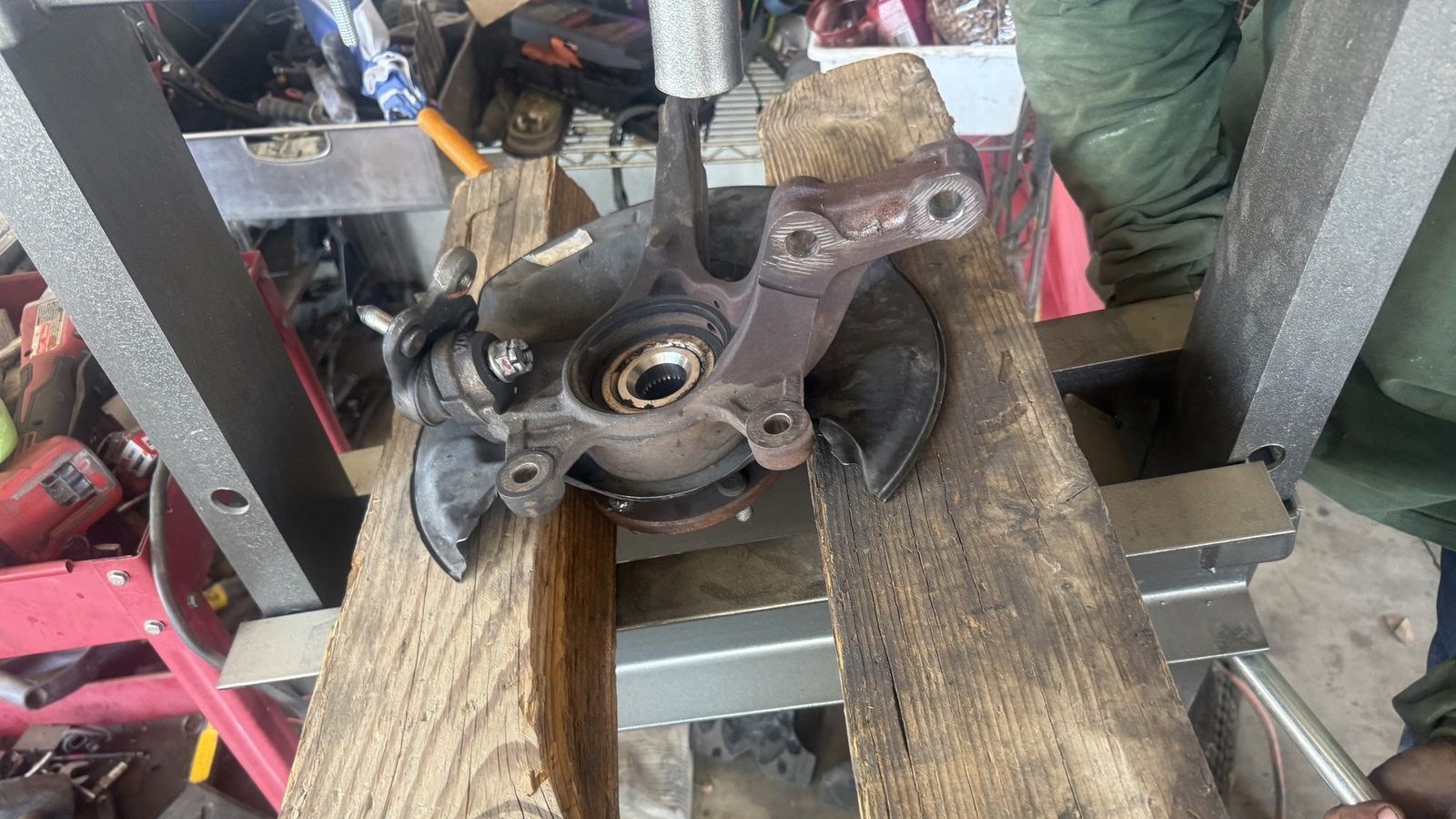

Once we know what is worn, the repair itself involves removing the bad part and putting in one that matches your vehicle's specs exactly. Depending on what needs work, this could mean swapping out struts, tie rod ends, or control arm bushings. Some jobs are straightforward swaps, while others involve pressing old bushings out and new ones in, which takes more care to do right. We make sure every replacement part is suited to your specific make and model, since suspension components vary quite a bit between vehicles. Getting the right part matters just as much as the installation itself, since a mismatched part can cause the same symptoms to come right back.
After any steering or suspension repair, an alignment is usually needed to make sure the wheels are angled correctly. This step protects your new parts and your tires from wearing unevenly all over again. Skipping the alignment after a repair is one of the more common reasons people end up back in the shop sooner than they should be. Correct alignment also affects how the car tracks on the road and how evenly the tread wears down over the following months. Since you just paid for new parts, it makes sense to protect that investment with a proper alignment rather than let bad angles eat away at them from day one.
The size of the job really depends on what is worn and how many parts are affected at once. A single tie rod replacement is a smaller, more contained job. But if multiple components are worn at the same time, which is common since these parts tend to age together under similar stress, the job grows to cover everything that needs attention. Vehicles with more complex suspension setups, including some with multi-link rear suspension or electronic ride controls, can take more time to work through carefully. Rust is another factor, since seized bolts on older vehicles or ones that see a lot of road salt can slow down even a simple swap and require extra care to remove safely without damaging surrounding parts.
Until the repair is done, pay close attention to how the car feels, especially any pulling, clunking, or looseness in the steering wheel. Avoid hard braking or sharp turns if the car feels unstable, since sudden moves put more stress on parts that are already weakened. Try to steer clear of potholes and rough roads where you can, since more impact just speeds up the damage. If the steering feels seriously loose or unpredictable, it is worth getting looked at sooner rather than later, since these parts directly affect your ability to control the car in traffic or in bad weather. Suspension problems rarely fix themselves, and waiting usually just turns a smaller repair into a bigger one.
What to Tell Us When You Call
- Year, make, and model of your car
- What you are noticing, like pulling, clunking, or a loose steering wheel
- Whether it happens over bumps, while turning, or all the time
- Any recent tire wear or alignment issues you have noticed

 Supercanic